I remember the first year I went fully self employed: taxes time came around and I owed a nice round sum that made me think “Oh, right!”, and a penalty I didn’t particularly expect on top of that. No one ever told me that when I stopped having taxes withheld from my paycheck, the responsibility for paying them to the government didn’t magically disappear, it just transformed into something more distributed and frequent over the year.
This is what quarterly estimated taxes are all about, and this is one of those subjects that seems intimidating at first but isn’t really that bad once you understand what’s going on. I’ve counseled several people in the past regarding their estimated tax liabilities, and in most cases they either haven’t touched the subject before reaching out to me in desperation or they just overpaid everything out of fear of owing more than they anticipated. Either way, both scenarios are understandable but ultimately misguided – and I think it speaks for itself why that’s the case.
In this guide I’m going to walk you through what quarterly estimated taxes are, who has to pay them, how to go about calculating your liabilities (without getting surprised later on), and a few general recommendations that I personally use and have seen work well for others in similar situations.
What Are Quarterly Estimated Taxes, Anyway?
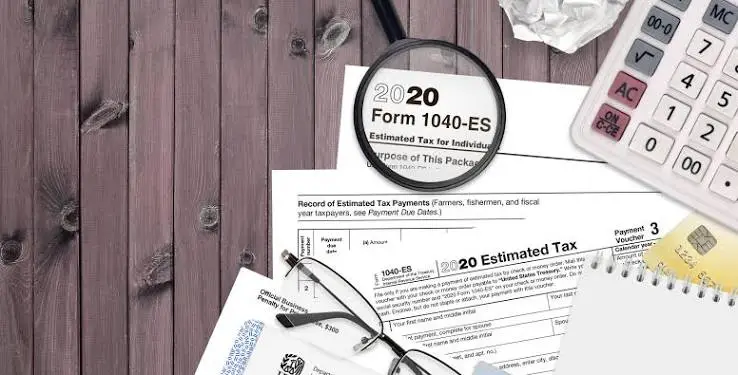
As mentioned, quarterly estimated taxes are a thing that you pay to the IRS and potentially your state, depending on where you live, throughout the year to cover income tax and self-employment tax liabilities stemming from income not subject to withholding. You can think of it as a pay-as-you-go tax, similar to how income earned from a regular W2 job has taxes withheld from each paycheck to cover your estimated annual liabilities, but for self-employed individuals, freelancers, and contractors who don’t have someone doing that for them
I think it’s important to note right off the bat that estimated taxes aren’t really a separate tax on top of what you already pay. They’re just income and self-employment taxes, but paid in installments throughout the year on a predicted amount instead of withheld from a paycheck at the end of the year.
Who Has To Pay Them, Anyway?
This is generally the first question I get asked, and it’s also the most important one in most cases. As a rule of thumb, you need to start paying quarterly estimated taxes if you expect to owe more than 1000 USD in taxes for the year, after accounting for any withholdings and refundable credits you may already have
This generally applies to:
- Freelancers, contractors, and other self-employed individuals
- Small business owners and sole proprietorships
- Partners in partnerships, and shareholders in S corporations
- People with substantial investment, rental, or other income not subject to tax withholdings
- Anyone with a side hustle that earns them significant income in addition to their regular paycheck
That last category might be a bit of a surprise to some, but I field this question often from people who have a steady job with taxes withheld from their paychecks, but also have some additional freelance work on the side. If that additional income source has income reported to the IRS, there’s a very real possibility that you’ll have to pay estimated taxes on it, especially if said income isn’t subject to any tax withholdings itself. On the other hand, if you have a relatively stable side job with withholdings, or you can increase the amount of taxes withheld from your primary source of income, you might be able to avoid estimated tax payments altogether.
As a general rule of thumb, I recommend that people with additional income on top of a regular paycheck consult with a tax professional about their liabilities and options, ideally before the end of the year
When Are They Due, Exactly?
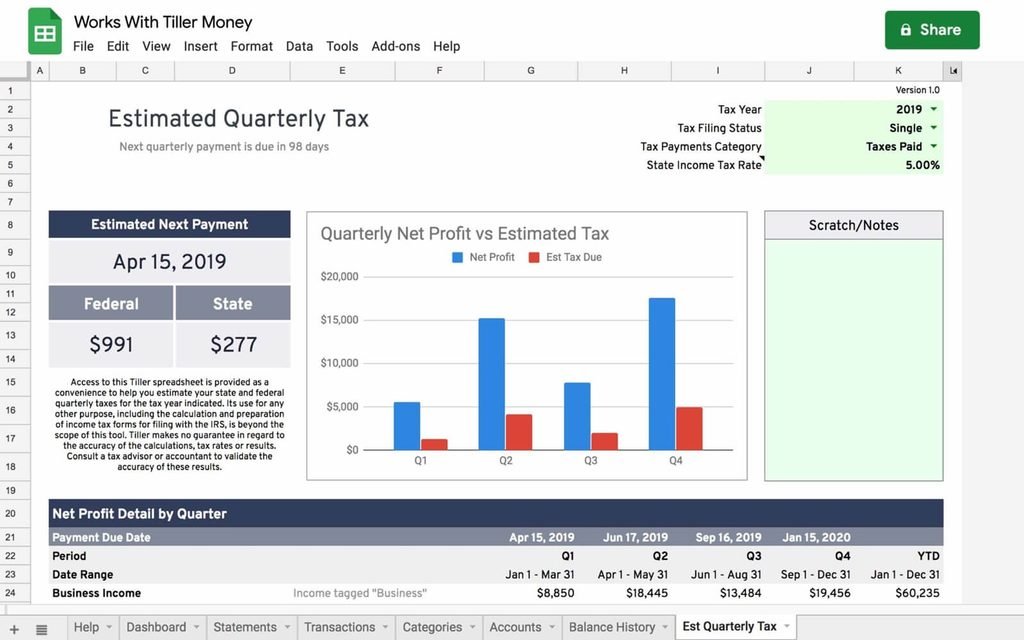
It’s worth noting that while they’re called quarterly, estimated tax payments don’t really follow a strict quarterly schedule. The IRS sets due dates for estimated tax payments at the following times during the year:
- First payment: April 15th
- Second payment: June 15th
- Third payment: September 15th
- Fourth payment: January 15th
While each payment is meant to cover roughly a quarter of your estimated tax liabilities for the year, the periods they apply to aren’t really equal, with the fourth payment covering the longest span of time. I see a lot of people get tripped up by this, as it’s easy to assume that each payment is due every three months after the previous one, when really the span between the third and the fourth payment is four months
If one of the due dates falls on a weekend or a holiday, the payment is due the next business day, so it’s always worth double-checking the calendar in the months leading up to a payment to make sure nothing has changed
How Do I Even Calculate What I Owe?
This is the part many new estimated taxpayers tend to have the most issues with, but it’s actually not that difficult once you break it down into steps.
First, you’ll have to estimate your total income for the year.
For many people it’s as simple as multiplying their estimated income from each project by how many such projects they expect to take on during the year, but if you have a somewhat stable income from freelancing, you should be able to use last year’s income as a rough baseline. For people whose income is particularly hard to estimate, particularly early in their self-employed career, it’s a good idea to err on the lower side and adjust your estimates as you go rather than surprise yourself with a significantly higher income later in the year.
Next, you’ll need to account for any business expenses.
If you’re self-employed, your taxable income isn’t really your gross income, it’s your gross income minus any business-related expenses you’ve made throughout the year.
Then you’ll have to calculate your self-employment taxes owed.
This is the part that trips up a lot of people who are new to estimated tax payments, because while you’re used to having your income taxes withheld from your paycheck, self-employment taxes are an entirely separate concept. In short, you need to pay social security and medicare taxes on your self-employment income as if you were an employer for someone who pays you, which means you’ll be responsible for both the employee and employer portions (a combined 15.3% of your self-employment income, but only a portion of that is subject to social security taxes).
After that, you’ll calculate your income tax similarly to how you would if you filed a regular tax return
Apply the standard tax brackets to your estimated income, taking into account any deductions or credits you’re entitled to claim, and you’ll get your estimated income tax liability.
Now you just need to add your estimated income tax and self-employment taxes together, and divide that number by four to get an estimate of your quarterly tax liabilities for the year, assuming a roughly equal income distribution throughout the year. If your income is estimated to peak at a certain point or is otherwise distributed unevenly, you might want to consider using the annualized income installment method
Another common method people use is basing each quarter’s payment on the previous year’s liabilities rather than estimating a number for the current year based on the previous year’s income
It’s actually one of the reasons why many people who pay estimated taxes find it useful to work with a tax professional, particularly in the first couple of years of being self-employed.
Safe Harbor And The Magic Of Last Year’s Taxes
Speaking of last year’s taxes, one of the things I always tell people who are required to pay estimated taxes is to get familiar with the safe harbor rule, because it’s honestly a lifesaver in terms of reducing the stress associated with estimated tax payments
In short, the safe harbor rule says that you’ll generally avoid underpayment penalties if you pay at least 90% of your current year’s tax liability or 100% of the previous year’s tax liability, whichever is smaller
If your previous year’s adjusted gross income (AGI) was over a certain threshold, however, it’s 110% of the previous year’s tax liability instead.
What this means in practice is that if your taxes this year are either close to last year’s or you’re estimating to have a higher income despite similar expenses, you can just use last year’s estimated taxes (divided by four) as a baseline for your current year’s payments without having to worry about underpayment penalties, even if your income this year ends up being significantly higher than last year’s. In the event that your income ends up being higher, you’ll have to pay the difference when you file your taxes, but you won’t be penalized for underpaying your estimated taxes.
For many people, that’s actually how I recommend they approach estimated tax payments for the first couple of years, particularly if they work with a tax professional. It removes a lot of the guesswork and stress associated with estimating your liabilities at the beginning of every year.
What Happens If I Don’t Pay, Or Pay Late?
The IRS levies an underpayment penalty on anyone who fails to pay the estimated taxes due by the due date, and the amount owed depends on how much you were short by and for how long. In practice, that means the IRS will charge you interest on the amount you were supposed to pay but didn’t, with the exact rate varying per quarter based on short-term federal interest rates
The penalty isn’t likely to be crippling, especially in the case of one or two missed payments, but it can certainly be surprising to people who weren’t aware they had to pay estimated taxes in the first place. The bottom line is that it’s always better to pay something close to the correct amount than to pay nothing at all, and to pay regularly rather than trying to make it all up at once in one big payment. The latter can be especially challenging if you’re not financially prepared to, at the end of the year, come up with an additional several thousand dollars in taxes on top of what you already pay.
If you miss a payment or it turns out you didn’t owe as much as you thought you did, it’s always better to pay what you owe as soon as you realize it rather than waiting for the next scheduled payment. The underpayment penalty is calculated based on the amount owed and the period of delinquency, so the earlier you catch up, the lower your penalty will be.
Other General Recommendations For Paying Estimated Taxes
In addition to the aforementioned tips, there are a few other general recommendations that I always give people who are required to pay estimated taxes:
- Save money as you earn it, in an account separate from your regular spending accounts, and pay your estimated taxes from that account rather than leaving it all to the end.
- If you find yourself doing more work than you budgeted for or landing a particularly high-paying client, you should consider adjusting your estimated tax payments rather than leaving them all the way until the end of the year
- Make sure to track your expenses throughout the year rather than waiting until the end of the year to estimate them
- Try to make your estimated tax payments electronically, whether through the IRS or your state’s portal, to have proof of payment in case of any disputes
- Consult a tax professional in the first couple of years of being self-employed or if your situation is particularly complex
Common Mistakes People Make With Estimated Taxes
Finally, here are some of the most common mistakes I’ve seen people make when paying estimated taxes:
- Misunderstanding self-employment taxes and not accounting for them when calculating tax liabilities
- Assuming there’s an equal quarter for each estimated tax payment and miscalculating the date of a payment as a result
- Forgetting to set aside money for taxes or only budgeting for one large payment at the end of the year
- Failing to update estimated tax payments when a significant change occurs and you now owe more or less than you originally anticipated
- Forgetting to take state estimated taxes into account, if applicable
One thing I think is worth mentioning is that if you pay federal estimated taxes, there’s a very good chance that your state also requires you to pay estimated taxes, just on a federal level. In most cases, the procedures are similar, so it’s always worth double-checking whether your state has any additional estimated tax requirements beyond the federal ones.
Closing Remarks
I hope that, having read this guide, you have a more solid understanding of what quarterly estimated taxes are, who has to pay them, and how to go about calculating and paying them without running into any unpleasant surprises at the end of the year. Accounting Assist Pro can also help you understand and manage your accounting and tax-related needs. In short, estimated taxes are simply your regular income and self-employment taxes paid in four installments rather than one big payment at the end of the year.
In my opinion, once you understand the basics of how estimated taxes work, there’s not much to be afraid of about them. If you’re new to estimated tax payments, my advice to you would be to make use of the safe harbor rule in the first couple of years of being self-employed or freelancing and budget around 25% of your income for taxes to the IRS and potentially your state, depending on where you live, so that you can make steady payments throughout the year instead of leaving it all to the end.
It may take some getting used to, but once it becomes second nature, paying estimated taxes isn’t really any different to budgeting regular monthly expenses like rent or insurance. I’d also like to encourage anyone who’s unsure about any part of the estimated tax process to consult a tax professional, especially in the first few years of self-employment or freelancing.
As a rule of thumb, I think the potential benefits of working with an accountant greatly outweigh the extra costs, particularly when it comes to setting up a predictable system of estimated tax payments.
Frequently Asked Questions
Do I have to pay estimated taxes if I have a regular job?
Only if your estimated tax liabilities from your freelance or self-employed work, less any withholdings you already pay, are expected to be more than 1000 USD for the year. In many cases it may be easier to just have more money withheld from your regular paycheck rather than making separate quarterly estimated tax payments.
Do I get a refund if I overpay my estimated taxes?
Any overpayments can generally be claimed as a credit when you file your taxes, either as a refund or as a reduction of the amount owed, depending on your situation.
Can I pay different amounts of estimated taxes every quarter?
Yes, in fact, that’s generally recommended if you have significantly varying income from quarter to quarter. This method, known as the annualized income installment method, is especially useful for people whose income varies significantly from one quarter to the next.
Is there a penalty for missing a quarterly estimated tax payment?
In most cases yes, though it’s generally not very steep if you only miss one payment. It’s always best to just pay the amount owed rather than leave it unpaid, and to pay regularly rather than all at once at the end of the year.
Do I have to pay estimated taxes to my state?
It depends on whether the state you live in has its own estimated tax requirements, but if you already pay estimated taxes to the federal government there’s a very good chance you’ll also have to pay them to your state. It’s always best to confirm your state’s requirements separately.
