Timely payroll tax calculation, reporting, and depositing are necessary to ensure that all requirements are met on time and there will be no penalties, fines, or interest for the employer. Requirements regarding payroll tax filings come from the IRS and may be additionally elaborated upon by state authorities and local jurisdictions. The 2026 IRS document provides detailed guidelines related to deposits, quarterly and annual tax filings. It is necessary to understand all the requirements before making payroll.
Key Payroll Tax Deadlines Employers Should Know
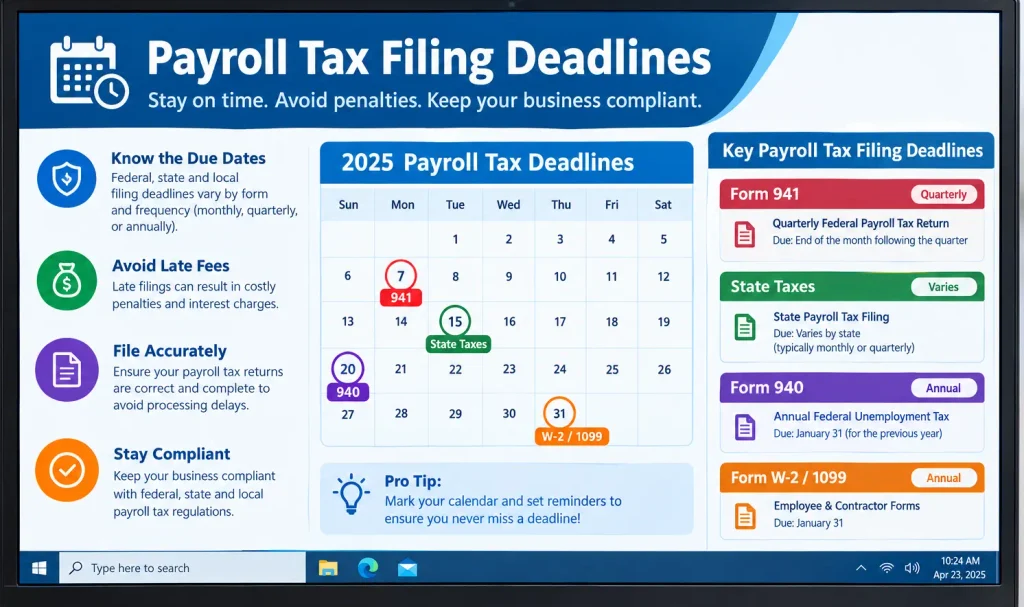
Payroll tax filing deadlines are deadlines at which certain payroll reports have to be made, or payroll taxes have to be paid by the employer. Federal schedules include separate dates for tax deposits, quarterly returns, and annual information reporting. Employers should identify their filing status before adding these dates to their payroll calendar. The correct schedule depends on factors such as tax liability and the required return.
Read More:- QuickBooks tax filing problems
Federal Payroll Tax Deposit Deadlines
- Monthly deposits are due by the 15th
- Semiweekly deposits depend on employee payday
- Wednesday-Friday paydays require deposits by Wednesday
- Saturday-Tuesday paydays require deposits by Friday
- $100,000 liability requires next-business-day deposits
- $50,000 liability determines deposit schedule
Federal Payroll Tax Filing Deadlines
- Form 941 is due quarterly throughout the year
- Eligible small employers can file Form 944
- Form 944 is generally due January 31
- Form 940 reports federal unemployment taxes annually
- Timely deposits may provide additional filing time
- Weekend deadlines generally move to the next business day
Year-End Payroll Reporting Deadlines
- Employers provide Form W-2 by January 31
- W-2 information goes to the Social Security Administration
- Form 1099-NEC is generally due January 31
- Reconcile wages and withholding before year-end filing
- Verify worker information before preparing annual forms
Payroll Tax Calendar: Important Dates by Period
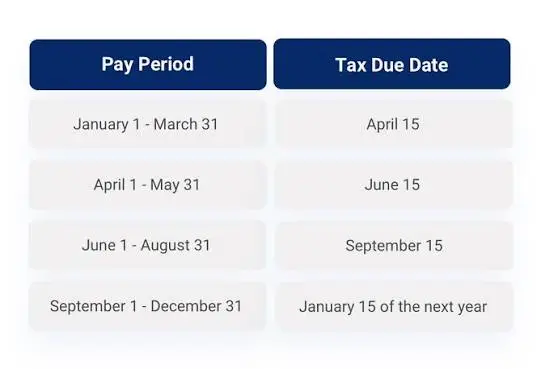
A well-maintained calendar helps employers organize payroll tax reporting, deposits, and year-end responsibilities.
First Quarter
- January includes year-end reporting and employee wage statement preparation
- January 31 generally marks the Form 941 deadline for the fourth quarter
- January 31 generally marks W-2 and Form 1099-NEC deadlines
- Employers continue required payroll tax deposits during January
- April 30 generally marks the first-quarter Form 941 filing deadline
Second Quarter
- April includes first-quarter payroll reporting and regular federal deposits
- July 31 generally marks the second-quarter Form 941 deadline
- Employers continue deposits according to their assigned federal schedule
- State withholding and unemployment deadlines should be tracked separately
Third Quarter
- July includes second-quarter reporting and ongoing federal payment requirements
- October 31 generally marks the third-quarter Form 941 deadline
- Employers should review year-to-date payroll records before fourth-quarter reporting begins
- Regular federal deposits continue throughout the quarter
Fourth Quarter
- October includes third-quarter reporting and ongoing payroll tax payments
- January brings several year-end reporting responsibilities
- Employers should prepare W-2 information before employee distribution
- Form 940 reporting generally occurs after the tax year ends
- Final payroll reconciliation helps identify missing wages or withholding before filing
Read More:- QuickBooks payroll tax payment not showing
Payroll Tax Forms Employers May Need
Different forms report different payroll taxes and wage information. Employers should identify every applicable form before preparing their annual payroll reporting process. Requirements depend on the business, workers, payments, and tax obligations involved.
Form 941
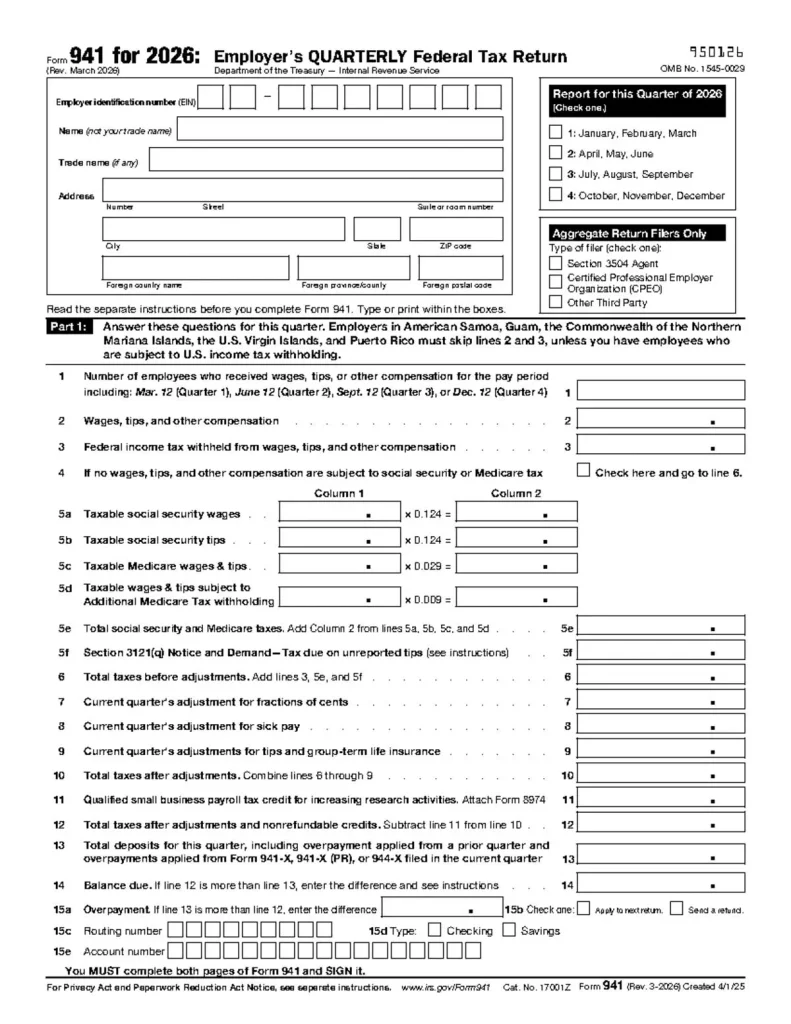
- Reports federal income tax withheld from employee wages
- Reports employer and employee Social Security taxes
- Reports employer and employee Medicare taxes
- Most employers file Form 941 quarterly
- Quarterly deadlines generally fall on April 30, July 31, October 31, and January 31
Form 940
- Reports Federal Unemployment Tax Act obligations
- Applies to employers meeting FUTA requirements
- The standard annual deadline generally falls on January 31
- Employers meeting specific payment conditions may receive an extended filing date
Form W-2
- Reports employee wages and federal tax withholding
- Shows Social Security and Medicare wage information
- Employers generally provide copies to employees by January 31
- Required copies also go to the Social Security Administration
Form 1099-NEC
- Reports qualifying payments made to nonemployees
- Applies when business payments meet applicable reporting requirements
- Recipients generally receive the form by January 31
- Contractor reporting differs from employee wage reporting
Understanding Payroll Tax Payments and Deposits
Payroll tax payments require employers to follow their assigned federal deposit schedule. Deposits generally happen before the related quarterly return is filed. Employers should never assume that filing Form 941 also satisfies every payment obligation. Federal employment tax deposits generally must use electronic methods when deposit requirements apply.
Employers should confirm their current deposit schedule each year. Monthly depositors generally pay by the 15th of the following month. Semiweekly depositors follow payday-based rules instead. The $100,000 next-day rule can change the required timing immediately.
State and Local Payroll Tax Deadlines
Federal requirements provide the baseline, but employers may face additional state and local payroll obligations. These rules vary based on where employees work and where the business operates.
- State income tax withholding may apply depending on the employee’s work location
- Some states impose separate unemployment insurance taxes and reporting requirements
- Certain cities or local jurisdictions impose additional payroll-related taxes
- State agencies may establish different payment and filing frequencies
- Employers should maintain separate federal, state, and local calendars
- Remote employees can create additional state registration and withholding considerations
How to Stay Compliant With Payroll Tax Deadlines
Strong payroll processes reduce missed dates and prevent avoidable reporting problems. Employers should combine calendar management, record reviews, payment confirmations, and official guidance. Regular checks make payroll tax compliance easier throughout the year.
Follow These Best Practices
- Maintain one centralized payroll tax calendar
- Track federal, state, and local requirements separately
- Review payroll tax forms before submission
- Confirm employee information regularly
- Reconcile payroll records before filing
- Keep proof of payroll tax payments
- Monitor IRS and state agency updates
- Use payroll software with deadline reminders
- Review upcoming payroll reporting deadlines before each pay cycle
- Verify electronic payment timing before submitting deposits
What Happens If You Miss a Payroll Tax Deadline?
Missing a payroll deadline can lead to penalties, interest, notices, and additional administrative work:
- Late federal tax deposits can trigger percentage-based penalties
- Deposits one to five days late can face a 2% penalty
- Deposits six to fifteen days late can face a 5% penalty
- Deposits sixteen or more days late can face a 10% penalty under applicable rules
- Certain unpaid amounts can reach a 15% penalty
- Incorrect reporting can require amended returns or additional documentation
- Employers should address missed obligations promptly
- Businesses should contact the relevant tax agency when clarification becomes necessary
Payroll Tax Compliance Checklist
Use this checklist throughout the year to support consistent payroll tax compliance:
- Verify employee information
- Calculate withholding accurately
- Review employer payroll taxes
- Confirm payroll tax due dates
- Submit required payroll tax payments
- File payroll tax forms on time
- Complete quarterly payroll tax reporting
- Prepare year-end wage statements
- Retain payroll records and payment confirmations
- Review upcoming payroll reporting deadlines
Conclusion
Following payroll tax filing deadlines keeps payroll reporting accurate and reduces avoidable compliance problems. Employers must separate tax deposits from quarterly and annual filings. Federal rules apply nationwide, while state and local requirements vary by jurisdiction. Accounting Assist Pro helps businesses understand payroll tax compliance and maintain organized records. Maintain a calendar covering every payroll tax due date throughout the year. Review official IRS and state guidance before each filing or payment. Organized records and timely payroll tax reporting support reliable payroll tax compliance.
FAQs About Payroll Tax Filing Deadlines
These common questions address important federal requirements for employers managing payroll taxes. Always verify current agency guidance before acting on a specific deadline.
What are the most important payroll tax filing deadlines for employers?
The main federal deadlines include quarterly Form 941 dates, annual Form 940 requirements, and January information returns. Payroll tax filing deadlines also include separate deposit dates.
How often do employers need to make payroll tax payments?
Employers generally follow monthly or semiweekly federal deposit schedules. Their required schedule depends on employment tax liability during the IRS lookback period.
What is the difference between payroll tax filing and payroll tax deposits?
Payroll tax filing reports payroll information to the IRS. Payroll tax deposits transfer required tax amounts before the applicable return deadline.
When are quarterly payroll tax forms due?
Form 941 is generally due April 30, July 31, October 31, and January 31. Extensions can apply when qualifying tax deposits are timely and complete.
What happens if an employer misses a payroll tax deadline?
A missed deadline can result in penalties, interest, notices, or additional filing requirements. Employers should correct the issue promptly and review applicable IRS guidance.
Are state payroll tax deadlines different from federal deadlines?
Yes, state and local requirements can use different filing periods, payment schedules, and forms. Employers should maintain separate calendars for every applicable jurisdiction.
Which payroll tax forms do employers need to file?
Common forms include Form 941, Form 940, Form W-2, and Form 1099-NEC. Required forms depend on the employer’s workers, payments, and tax obligations.
What are the key 2026 payroll tax rates employers should know?
For 2026, Social Security is 6.2% for both employers and employees. Medicare is 1.45% for both sides. The Social Security wage base is $184,500.