
Why monthly reconciliation matters and how it’s done right.
Accuracy of the bank records maintained by a business is achieved through bank reconciliation. The main problems faced by small businesses include missing deposits, duplicate transactions, uncashed checks, and unexpected fees. Such problems may lead to distortions of the cash account and financial statements. Maintaining a procedure allows the owners to detect errors early and ensure the accuracy of the records.
Why Bank Reconciliation Matters for Small Businesses
The reconciliation process provides small business owners with a clear picture of the available cash. It also assists in the detection of errors before they impact the financial statements. According to the recommendation of the United States Small Business Administration, accurate recordkeeping is essential to understand the business’s financial position.
- Improves cash flow visibility
- Helps detect unauthorized transactions
- Keeps accounting records accurate
- Supports informed business decisions
- Simplifies financial reviews
- Strengthens internal financial controls
10 Best Bank Reconciliation Tips for Small Business Owners
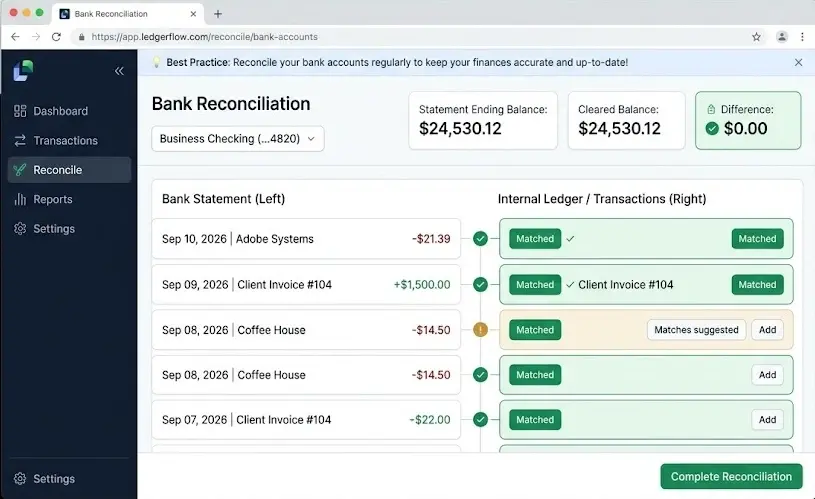
A consistent bank reconciliation process gives small business owners better control over their cash. The following tips make reconciliation faster, clearer, and more reliable.
1. Reconcile Bank Accounts Regularly
- Reconcile weekly when transaction volume remains high
- Choose monthly reconciliation for simpler accounts
- Avoid allowing transactions to accumulate
- Set a recurring calendar reminder
2. Compare Bank Statements Carefully
- Match statement balances with accounting records
- Check transaction dates and amounts
- Review opening and ending balances
- Confirm every listed transaction
3. Match Every Deposit
- Verify customer payments against recorded deposits
- Check deposits from payment processors
- Find missing entries promptly
- Remove duplicate deposit records
4. Review Outstanding Checks
- Identify checks that remain uncleared
- Review unusually old outstanding checks
- Confirm payment details before making adjustments
- Contact vendors about unresolved payments
5. Check Bank Fees and Charges
- Record monthly service fees accurately
- Include interest income in accounting records
- Review wire and transaction charges
- Confirm unexpected deductions with your bank
6. Identify Duplicate Transactions
- Compare similar payments carefully
- Check repeated deposits for duplication
- Remove duplicate entries after verification
- Review imported transactions before accepting them
7. Investigate Reconciliation Differences
- Identify transactions causing balance differences
- Check incorrect amounts and transaction dates
- Review missing or duplicated entries
- Correct confirmed errors without delay
8. Keep Supporting Documents Organized
- Save receipts and bank statements
- Maintain payment confirmations
- Organize records by accounting period
- Keep supporting documents easily accessible
9. Use Accounting Software
- Connect eligible bank accounts securely
- Automate transaction matching when available
- Reduce repetitive manual entry
- Review suggested matches before approval
10. Review Reconciliation Reports
- Confirm the final reconciled balance
- Check unresolved differences
- Save reconciliation reports for future reference
- Review reports during financial period closings
Common Bank Reconciliation Mistakes to Avoid
Mistakes can weaken otherwise accurate financial records. Owners should address small differences instead of carrying them into future periods.
- Ignoring minor balance differences
- Reconciling accounts only once annually
- Forgetting automatic bank transactions
- Entering transactions using incorrect dates
- Leaving old outstanding items unresolved
- Recording bank charges in the wrong account
How Often Should Small Businesses Reconcile Bank Accounts?
Most businesses should reconcile monthly at minimum. Businesses with frequent transactions may benefit from weekly reviews. A regular schedule makes the small business bank reconciliation process easier to manage.
Owners should choose a frequency based on transaction volume and business complexity. Waiting several months increases the chance of overlooked errors and unresolved differences.
What to Do When Your Bank Reconciliation Does Not Balance
A difference means the bank records and accounting records do not agree. Start by checking opening balances, recent transactions, fees, deposits, and outstanding checks. Compare each item rather than changing balances without evidence. Once you identify the cause, correct the accounting entry and reconcile the account again.
Conclusion
A proper bank reconciliation process ensures that the bank record of cash is kept accurate and easy to manage. The owners need to make regular reconciliations to detect any problems, including missing transactions, duplicate entries, bank charges, and others. It also ensures better financial reporting and decision-making regarding the use of cash. Small business owners should develop a schedule and keep the supporting documents organized.
FAQs
1. What is bank reconciliation?
Bank reconciliation compares your bank statement with accounting records to identify differences, missing transactions, duplicates, and errors.
2. Why is bank reconciliation important for small businesses?
It helps maintain accurate cash balances, detect errors, identify unauthorized activity, and support reliable financial reporting.
3. How often should a small business reconcile bank accounts?
Most small businesses should reconcile accounts monthly, while high-volume businesses may benefit from weekly reconciliation.
4. How do you reconcile a bank account?
To how to reconcile a bank account, compare balances, match transactions, investigate differences, correct errors, and confirm final balances.
5. What causes bank reconciliation differences?
Common causes include missing transactions, duplicate entries, incorrect amounts, bank fees, timing differences, and outstanding checks.
6. Can accounting software help with reconciliation?
Yes. Accounting software can import transactions, suggest matches, reduce manual entry, and simplify recurring reconciliation tasks.
7. What should you do with outstanding checks?
Review old outstanding checks, confirm their status, and investigate payments that remain uncleared for extended periods.
8. Should bank fees be included during reconciliation?
Yes. Record service charges, transaction fees, interest, and other applicable bank activity before completing reconciliation.
